
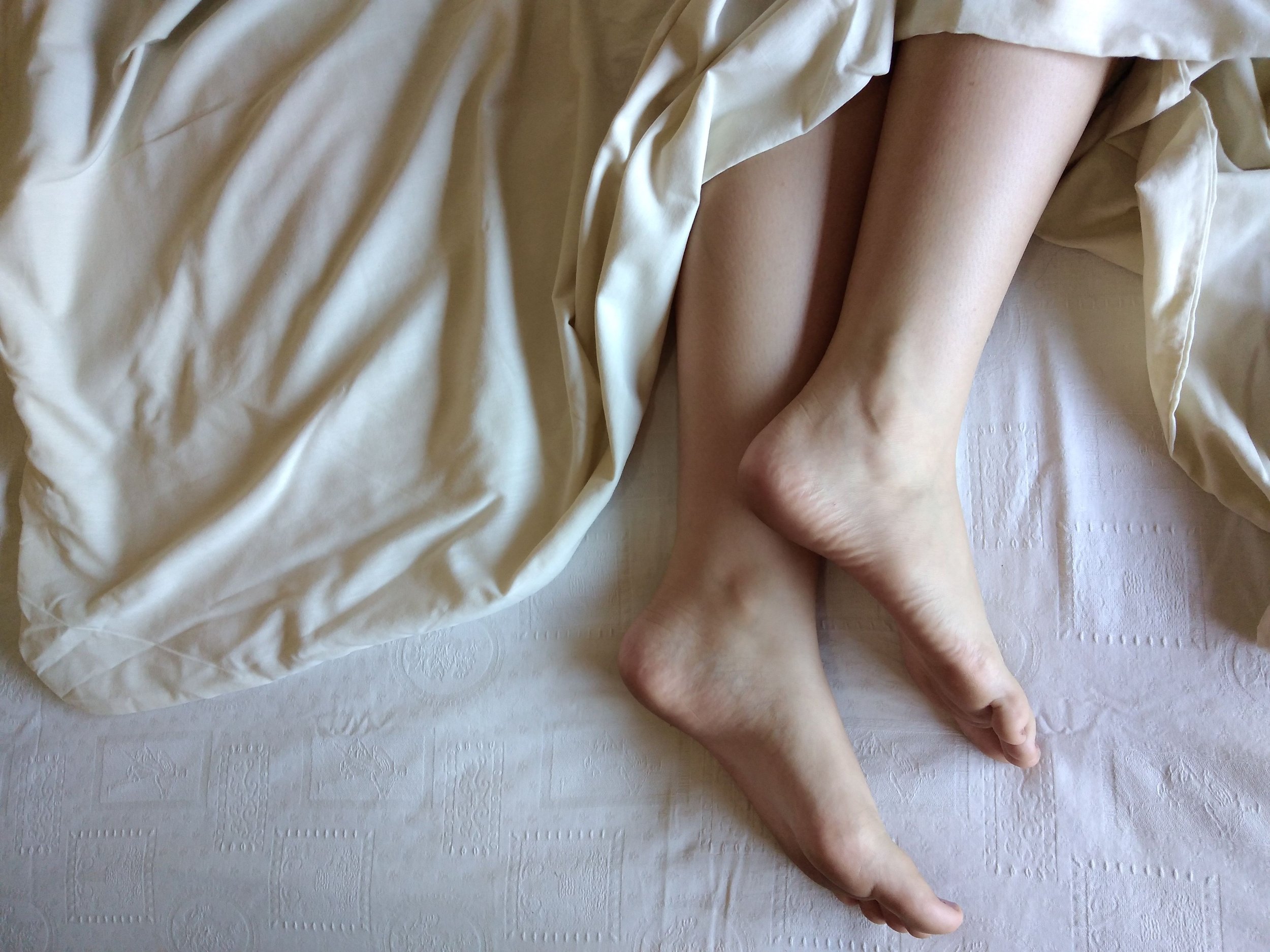
Restless Legs Syndrome
RLS is a sensory sleep disorder characterized by an irresistible urge to move the legs to relieve an often hard to describe sensation.
The sensation can feel electric, stretchy, tingly, crawly, or even painful, and is not always in the lower limbs. Symptoms feel better with movement but resume once movement stops. PLMD is a motor phenomenon which can only be diagnosed in sleep study: the legs are seen to have frequent repetitive movements during sleep which can disrupt sleep continuity. RLS tends to disturb falling asleep and PLMD tends to disrupt staying asleep. About 80% of people with symptomatic RLS also have PLMD of which they may not be aware! Both can contribute to poor daytime function because of either shorter sleep, interrupted sleep, or both.

The risks for the two conditions are similar: iron deficiency, medication use (like antihistamines and some antidepressants), family history, and some chronic health conditions. Lifestyle factors like alcohol and caffeine, especially late in the day, can exacerbate symptoms.

Evaluation starts with the history and, typically, blood tests for iron and ferritin levels. Sleep testing may not be needed, but nocturnal twitching, like that seen with PLMD, can also be a symptom of obstructive sleep apnea.
Treatment can be quite successful in improving symptoms. It starts with lifestyle modifications, medication evaluation, and optimizing iron levels if needed. There are supplements, medications, and a device that stimulates the peroneal nerve (in the calves) which can be used separately or together.